Did You Know The Historic About Brick-making Technique In My Son Sanctuary?
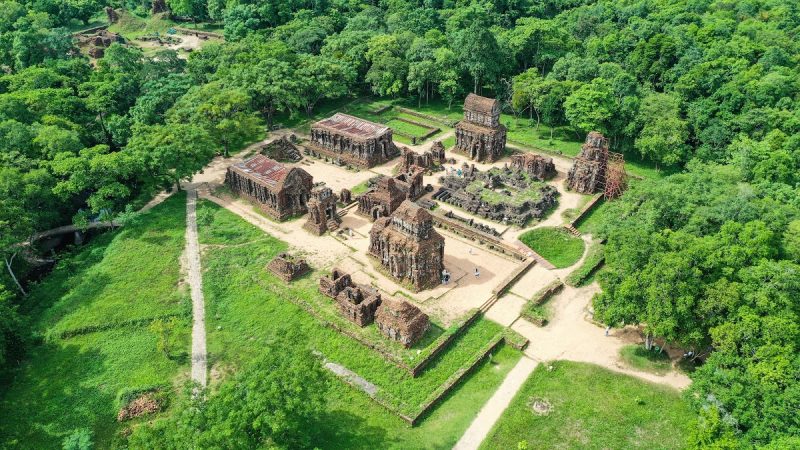
One of the most outstanding global values of the My Son Sanctuary is the unique brick-making technique of Cham artisans. Researchers have praised the Cham workers as masters of the art of brick architecture, who have created miraculous and timeless architectural constructions that still surprise us nowadays. In this article, we will explore together the Cham people’s brick-making technique in My Son Sanctuary.
About Cham’s brick characteristics
As we all know, in the architectural constructions of Champa in general and My Son in particular, the main materials used are bricks. These buildings are constructed of high-quality, waterproof bricks, with no mortar bond between the bricks, but fully bonded together. This has caused researchers a headache because really until now we still do not know exactly how the Cham people were able to create such miraculous bricks. This is the biggest challenge for those who have the task of restoring and preserving the My Son temple complex because we cannot make the exact bricks as the Cham people did.
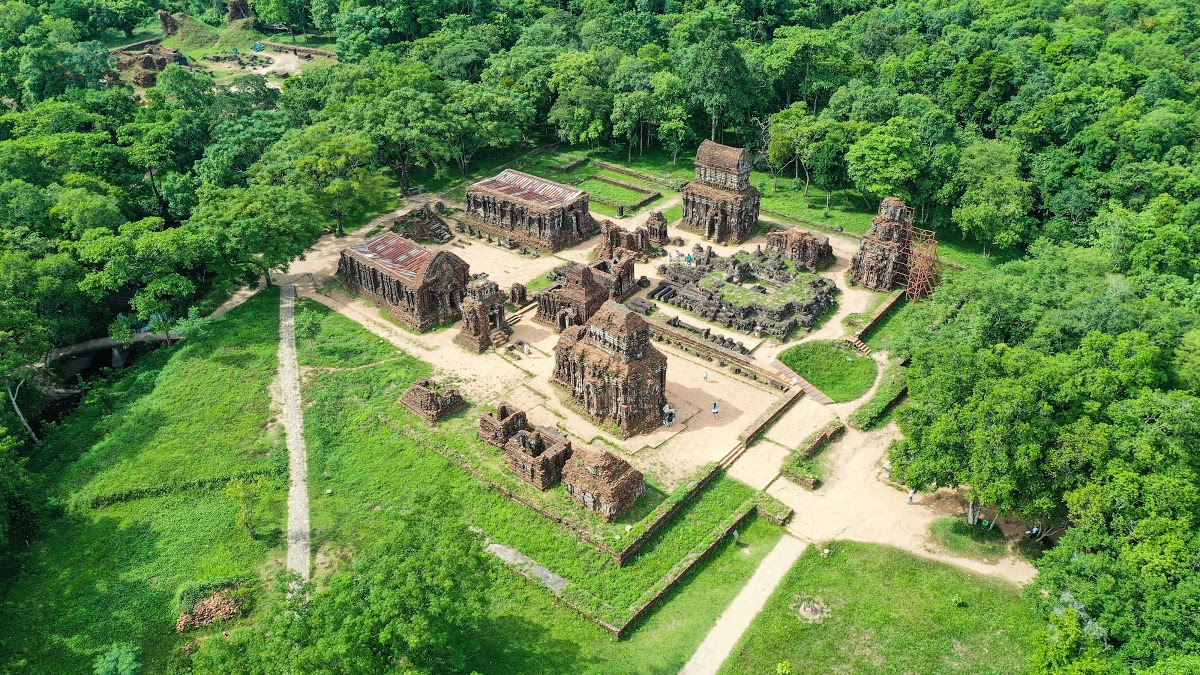
According to the analysis data, Cham Pa bricks are characterized by low hardness, quite soft because they are fired at a low temperature (850 degrees Celsius), but have high compressive strength and bearing capacity. In addition, the bricks of the people of Champa will drain water faster than normal bricks and are about 1.3 times lighter. That’s why when visiting My Son temple, the original bricks made by the Cham people are still intact, not covered by moss, and the bricks were added during the restoration process. moldy and dusty.
Theories about Champa culture
According to researcher Tran Ky Phuong, who has spent decades studying Champa culture, he stated that: “According to a number of early hypotheses, the people of Champa used a type of vegetable resin which today’s local population calls dầu rái and which comes from the tree Dipterocarpus Alatus Roxb. as a bonding agent to fix the bricks together. This tree was planted to form forests in central Vietnam; its trunk is broad, round, tall, and straight; its resin can be harvested annually in large quantities, has strong adhesive properties, and is completely waterproof.
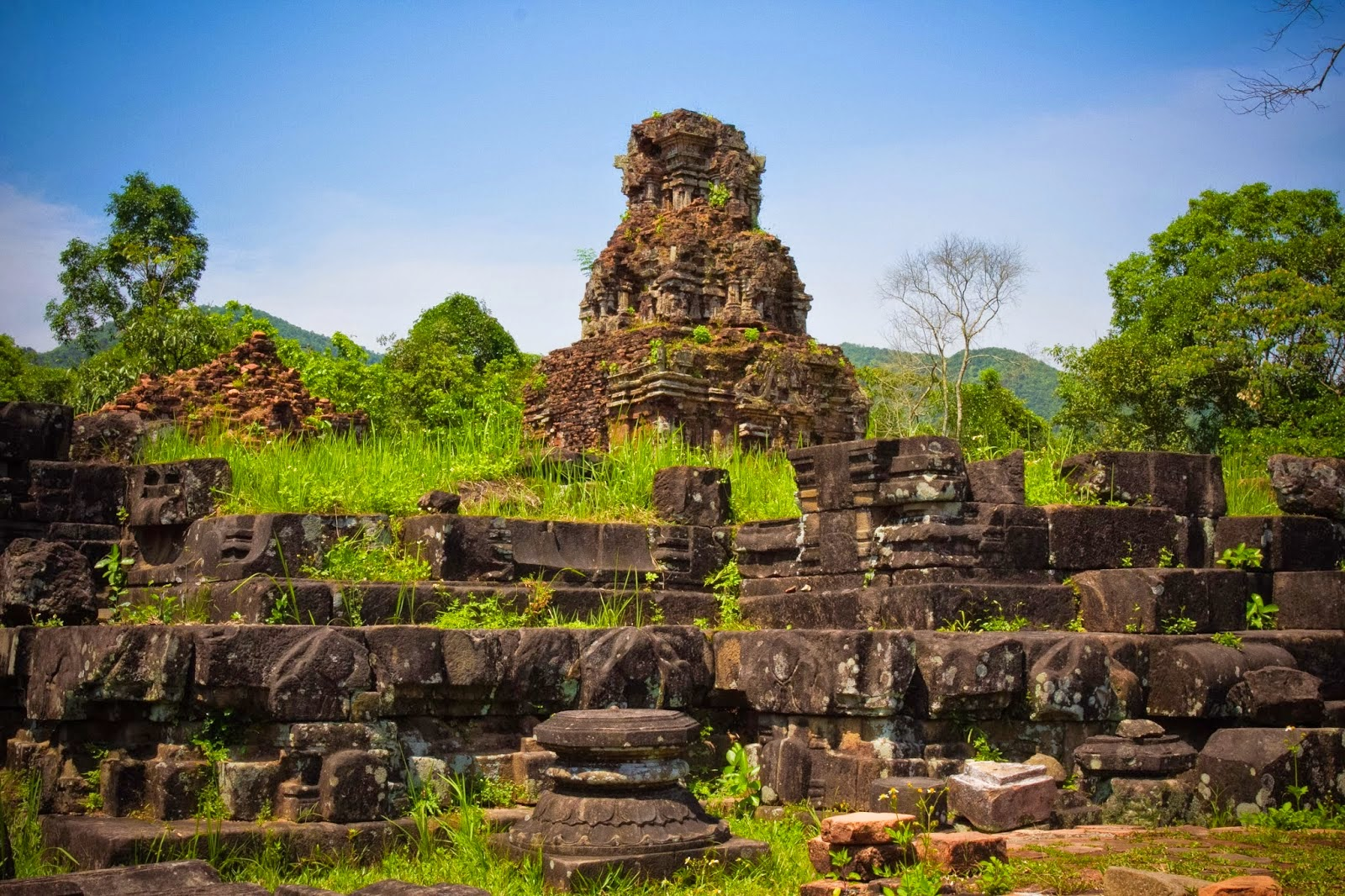
The resin is extremely easy to use: it is mixed with clay or brick powder to form a mortar that dries and hardens easily in the sun. The tower walls are very thick, measuring 1 m to 1.5 m. The hollow space inside was padded with brick fragments glued together with resin. Only the two outer walls were built with regular bricks, which were filled and polished after construction. Once the wall was built, the sculptors started work ,engraving their motifs directly on the brick. After completion, the wall was coated with a layer of resin to protect the exterior of the tower and prevent damage from the sun and rain.
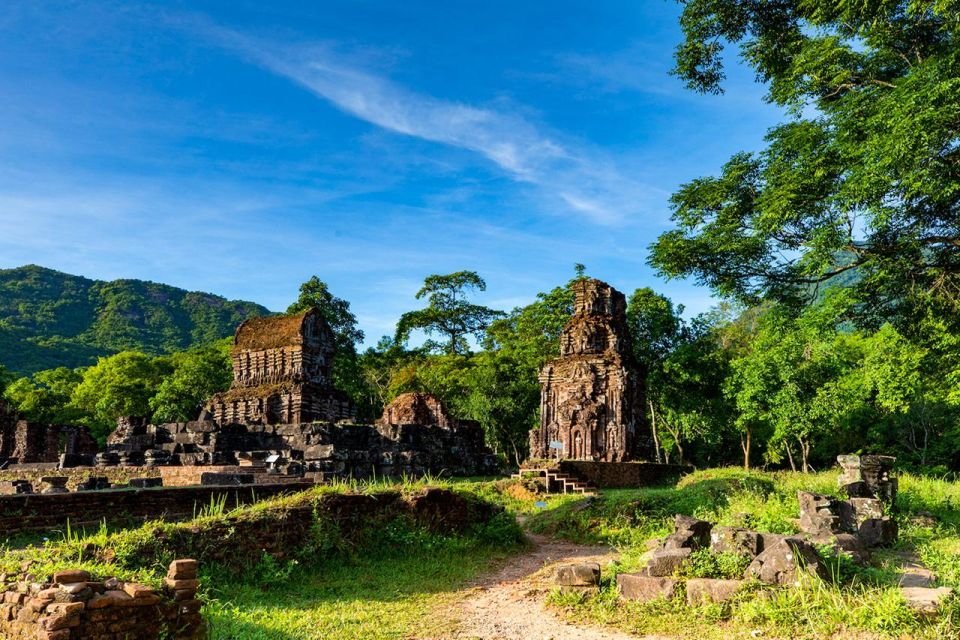
Today, this resin is still very widely used by the people of central Vietnam, especially in the building of boats and junks. It is usually mixed with lime extracted from clam shells and plastered on the boat’s hull or joint lines (where the planks are connected) for waterproofing. Chemical analysis of the adhesive properties of the resin, as applied in the construction of the most recent temple towers, shows that the Cham did use a locally available type of vegetable resin to join the bricks together and that the bricks used were fired at an average heat of less than 850°C.23 Furthermore, comparison with the most adhesive vegetable resins currently used by the inhabitants of central Vietnam renders this theory — that the people of ancient Champa used dầu rái resin in their construction of the towers — extremely convincing”.
Conclusion
In conclusion, delving into the historic nuances of brick-making techniques at My Son Sanctuary reveals a captivating narrative of ingenuity and craftsmanship that has withstood the test of time. The preservation of My Son Sanctuary serves as a poignant reminder of the importance of safeguarding our cultural heritage for future generations, ensuring that the remarkable story of brick-making in this historic sanctuary continues to captivate and inspire. Visiting the My Son temple complex is also an opportunity for you to remember and admire the Champa culture, a kingdom that flourished in the past.